Guide 04 / Busan
How to eat well in Busan
Busan’s food identity follows its coast, markets and working neighbourhoods. Seafood is important, but it is only one part of a city where noodles, pork, grilled dishes and street snacks each have their own districts.
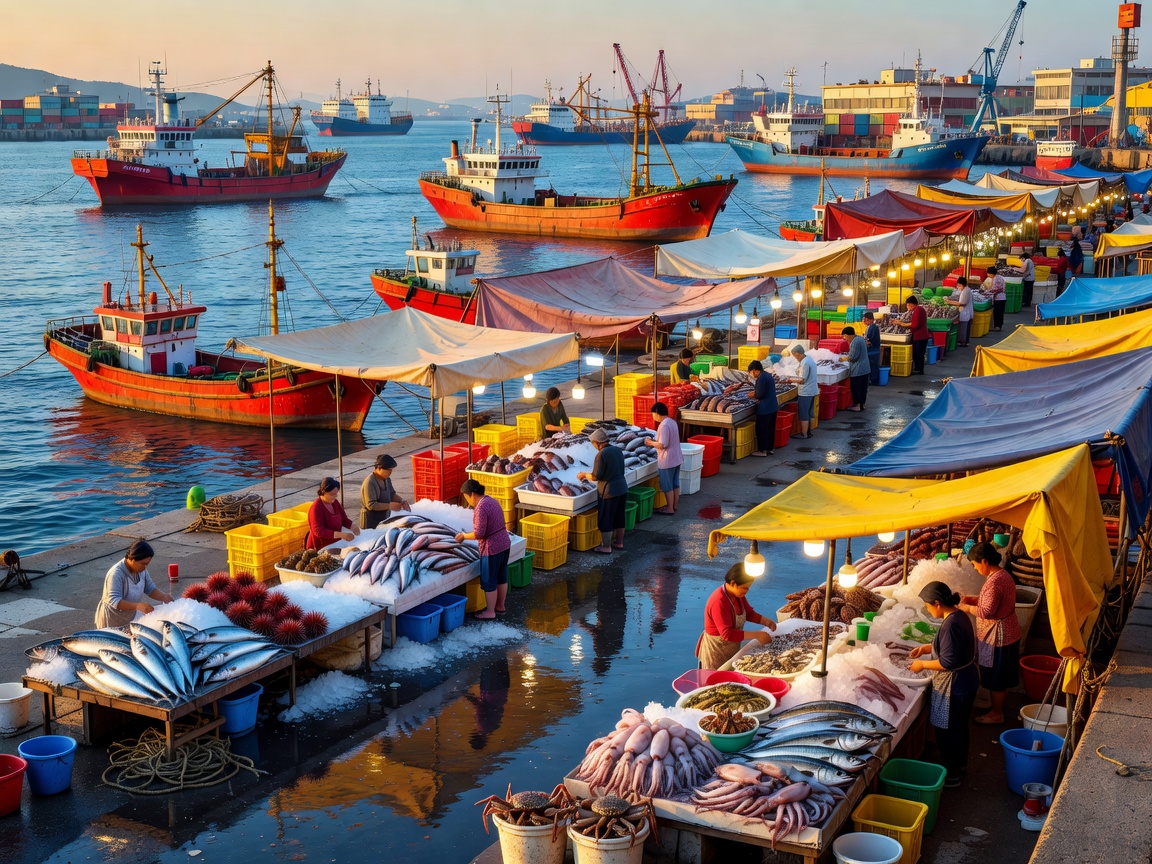
Jagalchi and Nampo
Jagalchi Market is the obvious reference point for seafood. The wider Nampo area adds BIFF Square, Gukje Market and Yongdusan Park, making it easy to combine food with a central walking route. Market dining can involve selecting seafood and paying for preparation separately, so ask how the ordering system works before choosing.
Jagalchi is best approached as a market experience rather than a single restaurant. Conditions, opening hours and individual stalls vary. If you prefer a defined menu and fixed service, choose a restaurant nearby and confirm the details directly.
Gwangalli
Gwangalli combines beach views with a dense evening food scene. Raw fish restaurants, grilled dishes, cafes and casual bars line the broader area. The bridge view is part of the setting, but it can also mean higher demand for tables with a particular outlook. A table away from the waterfront may provide the same food with less waiting.
Gwangalli suits a relaxed evening when the meal and the walk matter equally. It is less efficient for an itinerary concentrated around Nampo or Haeundae. Use the subway or taxi information for the exact venue rather than assuming nearby districts are walkable.
Haeundae
Haeundae has hotels, beach access and a wide mix of restaurants. The traditional market near the beach is useful for casual dishes and snacks, while larger restaurants serve seafood, grilled meat and Korean set meals. The district is convenient for visitors staying nearby, but a restaurant’s address can place it well away from the main beach strip.
Choose Haeundae when the coast is central to the day. A meal here can anchor a beach itinerary without adding another city crossing. For a market-focused route, Nampo may offer a denser historical sequence.
Seomyeon
Seomyeon is a central interchange and a strong choice for variety. It has pork barbecue, milmyeon, hotpot, fried chicken, cafes and late-night options across busy commercial streets and smaller alleys. It is less scenic than Gwangalli but often more flexible for groups with different preferences.
Milmyeon, a wheat-based cold noodle dish associated with Busan, is a useful local speciality to seek out. Dwaeji gukbap, a pork-and-rice soup, is another common Busan comfort food. Menus and preparation differ between venues, so use the restaurant’s own description when comparing them.
Ordering and timing
Seafood restaurants may price by weight, market selection or preparation style. Ask whether side dishes, cooking, drinks and service charges are included. For barbecue, check whether staff grill the meat or whether the table does it. For busy markets, carry a translation of dietary requirements and do not assume every stall can accommodate them.
Keep one flexible meal in the plan. Busan’s geography means that a delayed coastal journey can make a fixed reservation inconvenient. Book the meal that matters most, then leave simpler options for arrival days and transfer days.